The Half Lemon is an Inline Freestyle Slalom Skating trick and one of the most important fundamentals of the sport.
In the Half Lemon, we skate through the cones in a slalom pattern using only one inline skate, either the left or the right. The other skate travels alongside the cones in a straight line.
In principle, the Half Lemon is also a beginner trick. However, we classify it as a fundamental skill because it helps us develop essential abilities such as weight transfer, coordination, and balance. These skills are crucial for all more advanced tricks that follow.During the Half Lemon, we learn to move both legs independently and to consciously coordinate weight transfer within the foot, shifting from the toes to the heel and back again.
In addition, the Half Lemon is an excellent warm-up exercise before continuing with more challenging tricks.
Half Lemon – Short Clip
In the following short video, we show you the Half Lemon in action. You can watch it from different perspectives and angles, both in real time and in slow motion.
Further down, you will also find a detailed video tutorial for the Half Lemon. In it, we explain and show you every single intermediate step, from the very beginning, step by step, all the way to the final trick.
Table of Contents
- Video Tutorial – The Half Lemon Explained Step by Step
- What is the Half Lemon?
- Preparing for the Half Lemon
- Body position for the Half Lemon
- The movement sequence for the Half Lemon
- The Half Lemon and our cones
From the first steps to the final trick
1. Video Tutorial – The Half Lemon Explained Step by Step
In our detailed Half Lemon video tutorial, we not only cover the first steps all the way to the final trick, but also show you how to further improve your Half Lemon and specifically train your switch side.
2. What is the Half Lemon?
The Half Lemon is one of the most important fundamental tricks in Freestyle Slalom Skating. In German, it is also commonly referred to as the „Half Lemon“ or „Half Melon“.
Despite its apparent simplicity, the Half Lemon is an essential trick that significantly improves your skating technique and movement coordination in slalom skating.
2.1 How to perform the Half Lemon
During the Half Lemon, both inline skates remain on the ground at all times. With one skate, you move through a row of slalom cones in smooth, curved lines.
The other skate travels parallel to the cone line alongside it. Which side you choose for the slalom movement is entirely up to you. You can perform the trick with either your right or your left leg.
 Execution and Body Position of the Half Lemon
Regular Side vs. Switch Side
The side on which the movement feels easiest is called your regular side.
The opposite, less-practiced side is known as your switch side.
Tip:
For clean and well-rounded Freestyle Slalom Skating, you should train both sides equally. Mastering both your regular and switch side gives you a major advantage when learning more advanced tricks and adds greater versatility to your skating technique.
2.2 Why is the Half Lemon so important?
Although it is considered a basic trick, the Half Lemon is one of the most important foundations of Inline Freestyle Slalom Skating.
It helps develop:
- Balance and body posture
- Flow of movement and power generation
- Coordination between both legs
As a result, the Half Lemon serves as the foundation for many more advanced tricks and should be mastered with confidence before moving on.
3. Preparing for the Half Lemon
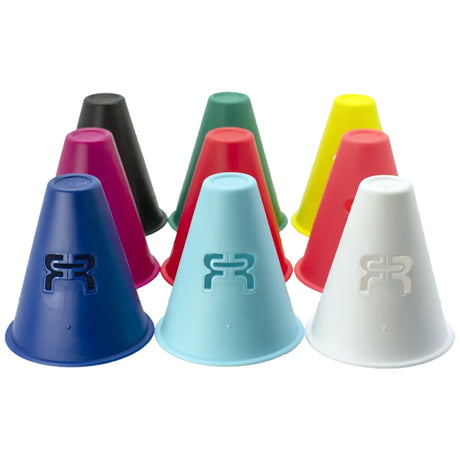
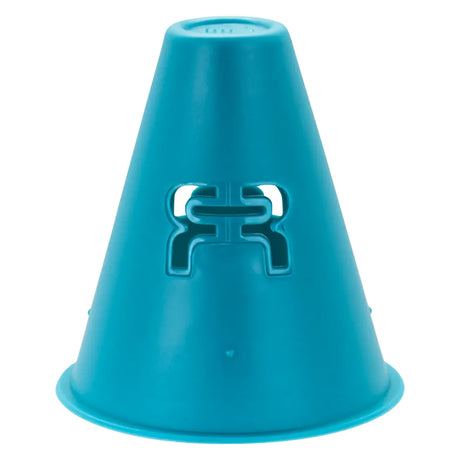
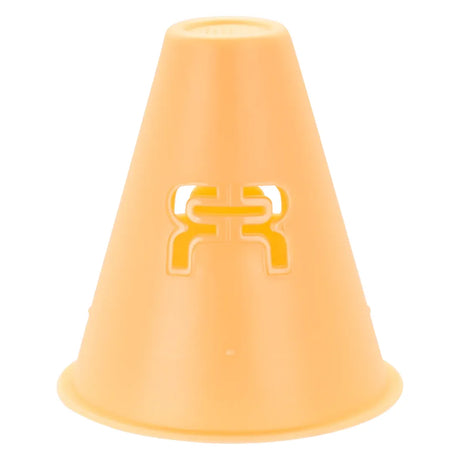
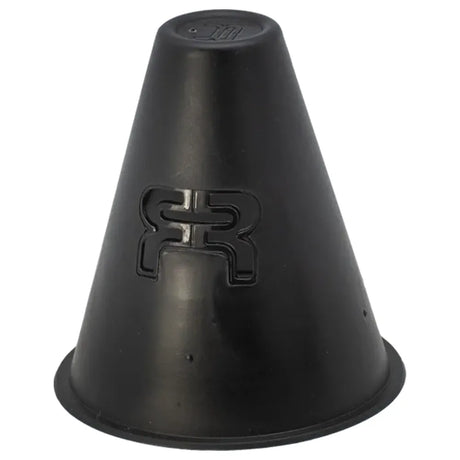
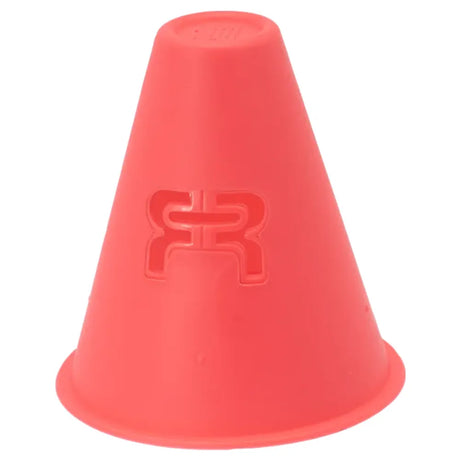
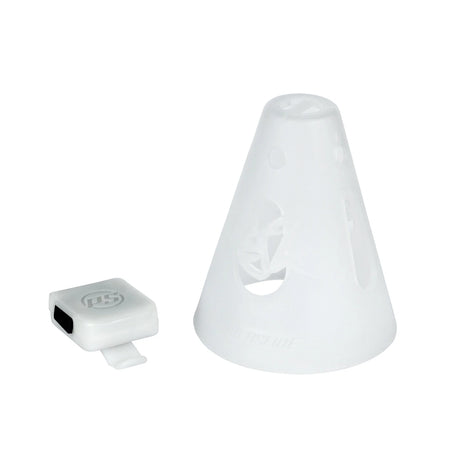
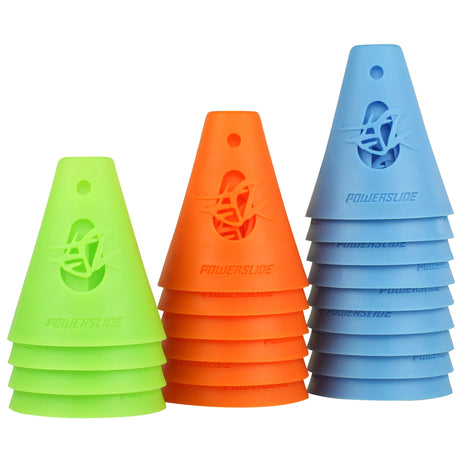
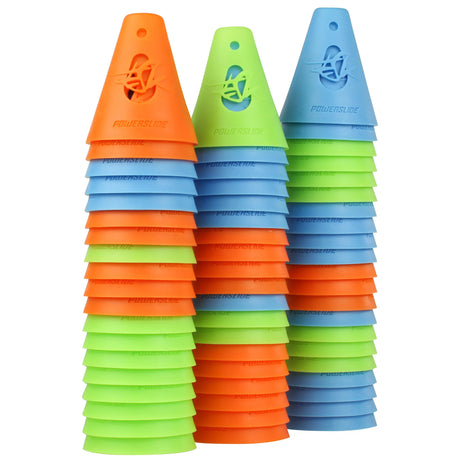
For freestyle slalom skating, and therefore also for the Half Lemon, you will need a few important pieces of equipment in addition to your inline skates and appropriate protective gear: the so-called cones, also known as slalom cones.
3.1 Cone setup according to the rulebook
For practicing the Half Lemon, we use two rows of cones, set up according to the official competition standards of Inline Freestyle Slalom Skating:
- First row: 14 cones spaced 120 cm (47.2 in) apart
(shown in green in our example) - Second row: 20 cones spaced 80 cm (31.5 in) apart
(shown in orange in our example)
3.2 Additional orientation with chalk lines
To make learning the Half Lemon easier, we also draw two parallel lines on the ground using chalk (for example, sidewalk chalk):
- One line runs along the left side of the cone row.
- A second line runs along the right side of the cone row.
Both lines run parallel to the cone row and are positioned approximately 20 cm (7.9 in) away from the cones.
These lines serve as visual guides and help you better control your skating path, body alignment, and movement pattern.
 Orientation – Half Lemon
4. Body position for the Half Lemon
To perform the Half Lemon safely and cleanly, proper body posture is essential. The correct starting position provides the foundation for learning the trick in a controlled, stable, and effective way. The better your starting posture, the easier it will be to execute the movements cleanly and maintain the precise weight transfer required for the trick.
4.1 The starting position – step by step
For proper body posture, pay attention to the following points:
- Assume a Scissor Stance
Stand on a flat surface and place one skate slightly in front of the other, creating a stable scissor stance. - Bend Your Knees Deeply
Bend your knees until they are positioned above your toes—or even slightly beyond them. This position provides greater stability and control on your skates. - Lean Your Shoulders Slightly Forward
Lean your upper body slightly forward, but not farther forward than your knees. This helps keep your center of gravity properly balanced. - Keep Your Hips Above Your Heels
Make sure your hips, or glutes, remain directly above your heels. Avoid leaning backward, as this makes it more difficult to maintain control of your skates. - Look Straight Ahead
Keep your head upright and direct your gaze forward. Avoid constantly looking down at your feet, as this helps maintain a stable and natural body position.
 Body Position – Half Lemon
4.2 Training your balance – the first practice step
Once you can comfortably maintain this position, the next step is to practice controlling your center of gravity.
- Start by assuming the stance you learned earlier. Then begin alternating which foot is placed in front, switching between your left and right foot.
- Repeat this movement several times while standing still, alternating between the left and right leading foot until you can perform it smoothly, confidently, and with good stability.
This exercise helps you develop a feel for weight transfer and provides the ideal foundation for the slalom movements used in the Half Lemon.
5. The movement sequence for the Half Lemon
After practicing the correct body position and the fundamentals of weight transfer, we can now focus on the actual movement pattern of the Half Lemon.
5.1 How to learn the Half Lemon properly
Work through the following steps in order to safely learn the movement pattern of the Half Lemon:
- Assume your familiar starting position.
- Rotate one skate by approximately 90 degrees so that both heels are close together. Use the rotated skate to trace a half-circle forward. The goal is that, after the movement, your toes are facing each other instead of your heels.
- Then trace the half-circle back to the starting position.
This exact movement pattern forms the foundation of the Half Lemon. - Now give yourself a gentle push backward with the rotated skate and repeat the movement in a smooth, continuous motion.
- Make sure that the other skate remains on the ground throughout the exercise and continues pointing straight in the direction of travel.
At first, repeat the movement slowly and with control. Focus on clean execution and smooth, consistent weight transfer before gradually increasing your speed.
 Standing Exercises – Half Lemon
5.2 The key: Your center of gravity
If you find it difficult to trace the half-circle with one skate while keeping the other skate stable and rolling straight, the cause is usually incorrect weight transfer. Remember:
Your primary weight should always be on the supporting leg—the skate that is traveling straight ahead.
Tip: Make sure that your head, or more specifically your chin, is positioned directly above the supporting leg. Your center of gravity should not be evenly distributed between both legs; instead, it should be clearly centered over the skate carrying your weight.
Turning the Skates Back into the Starting Position
Once your toes are facing each other, you need to open the skates again and align them with the direction of travel. The easiest way to do this is by consciously shifting your weight away from the front wheels and toward your heels. This weight transfer makes the skates easier to rotate, allowing you to guide them back into the starting position with control.
This constant transition between loading the toe area and the heel area is an important part of the Half Lemon and helps develop the weight-transfer skills that are so essential in Freestyle Slalom Skating.
6. The Half Lemon and our cones
The final step in learning the Half Lemon is to perform the trick safely, with control, and smoothly through the cone rows.
Now it’s time to practice, apply, and refine the movement. The more often you repeat it, the more natural your weight transfer, body position, and overall movement pattern will become. At first, focus on clean execution rather than speed. As your confidence and consistency improve, the Half Lemon will become increasingly fluid and will serve as a solid foundation for many other Inline Freestyle Slalom Skating tricks.
6.1 How to learn the Half Lemon through the cone rows
-
Start with the 120 cm Cone Line
Begin with the larger cone line, where the cones are spaced 120 cm (47.2 in) apart. This gives you plenty of room to practice the Half Lemon movement pattern at a comfortable pace. -
Skate Half Lemons Next to the Cones
Your supporting leg should remain on one of the chalk lines you drew earlier (for example, on the right side of the cone line). With the other skate, perform the Half Lemon movement on the left side of the cones. Make sure to bring both skates back together after every second cone. -
Increase the Frequency
Once you feel comfortable with the movement, repeat the same exercise. This time, however, bring your skates back together after every cone instead of every second cone. - Skate Through the Cone Line in a Slalom Pattern
Now perform the Half Lemon in a smooth, flowing slalom motion directly through the cone line. Try to maintain a consistent rhythm and focus on executing the movement as cleanly and with as much control as possible.
With regular practice, your Half Lemon will become increasingly fluid, and you will develop a better feel for weight transfer, balance, and overall movement control.
 Final Execution – Half Lemon
6.2 Increase the difficulty, improve the half lemon, and train your switch side
Once you can confidently skate through the 120 cm (47.2 in) cone line, it is time to move on to the 80 cm (31.5 in) cone line. The fundamental movement pattern remains exactly the same. However, the reduced distance between the cones requires significantly more precision, control, and concentration.
The closer the cones are positioned and the faster you skate, the more they begin to blur visually. For this reason, it is important that you are able to precisely control both your speed and the movement radius of your Half Lemon.
Exercises to Improve Your Half Lemon
To further develop your Half Lemon, try the following exercises:
- Perform the Half Lemon as slowly and controlled as possible.
- Start the trick directly from a standstill without taking a push beforehand.
- Practice the Half Lemon with very shallow arcs to learn how to maintain control at higher speeds.
- Practice the Half Lemon with very tight and pronounced arcs to improve your precision and overall control.
Training Your Switch Side
Finally, you should also practice the Half Lemon on your switch side. This means that if you have been using your right leg as the supporting leg, you should now perform the trick with your left leg as the supporting leg, and vice versa.
The ability to skate confidently on both your strong side and your weaker side, while maintaining control over your speed, movement radius, and agility, is what distinguishes a skilled Freestyle Slalom Skater. In addition, it provides an essential foundation for many advanced tricks and trick combinations.